2026 Best Bath Ventilation Fan for Global Buyers?
Choosing the 2026 Best Bath Ventilation Fan for Global Buyers requires more than comparing airflow figures. A reliable Bath Ventilation Fan must control moisture, remove odors, limit noise, and match local electrical conditions. The World Health Organization links persistent dampness and mould with respiratory health risks in its Guidelines for Indoor Air Quality: Dampness and Mould. That evidence makes bathroom ventilation a health and building-quality issue, not merely a comfort upgrade.
Technical standards provide a useful starting point. ASHRAE Standard 62.2-2022 commonly uses 50 cubic feet per minute for intermittent bathroom exhaust, or 20 cubic feet per minute for continuous operation. These figures are benchmarks, not universal answers. Room size, duct length, bends, climate, and installation quality can change actual performance. The U.S. Environmental Protection Agency’s moisture-control guidance also emphasizes exhausting humid air outdoors and preventing condensation around ducts and ceilings. ENERGY STAR certification adds practical checks for efficiency and acoustic performance. Quiet matters. A fan rated at 1.0 sone may feel very different from an older, rattling model beside a bedroom.
Global buyers face further complications. Voltage may vary between 110–120V and 220–240V systems. Some markets require specific safety certifications, while coastal buildings may need stronger corrosion resistance. IP protection, backdraft shutters, timer controls, and heat-recovery options deserve careful review. A high airflow number can mislead when the duct is narrow or poorly sealed. This guide compares leading options through those real installation conditions, while admitting one limitation: no single fan is perfect for every country, climate, or bathroom.
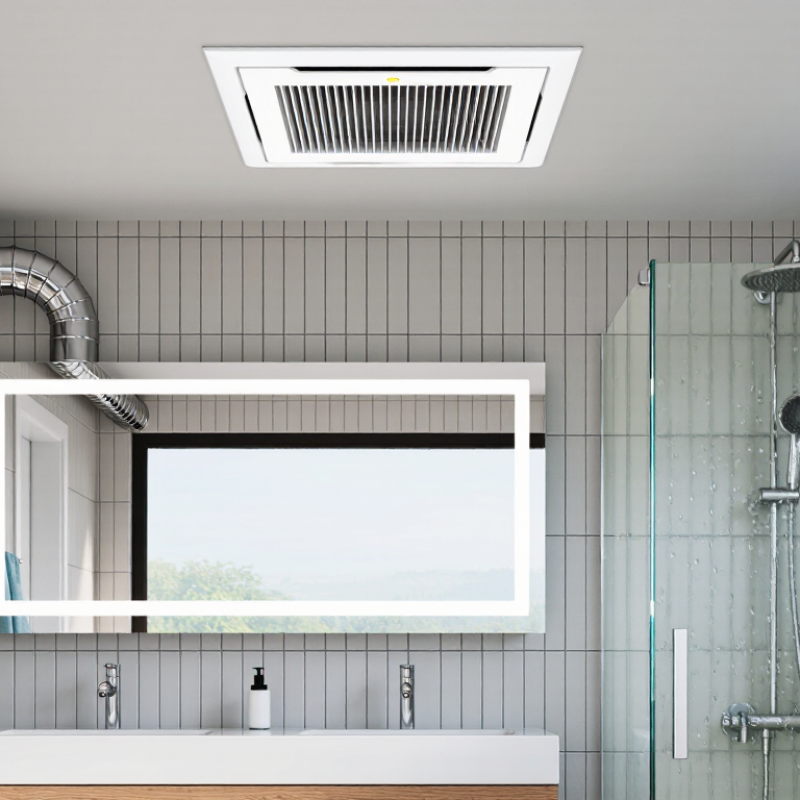
What Is a Bath Ventilation Fan and Why Does It Matter in 2026?
A bath ventilation fan is a mechanical exhaust device that removes humid air, odors, and airborne particles. Without steady extraction, warm vapor settles on mirrors, paint, ceilings, and grout. Over time, this may encourage surface damage and persistent mildew. The real issue is timing. A quiet fan used during bathing and afterward can protect the room more effectively than a powerful fan used briefly. In practical bathroom inspections, I check airflow, noise, duct length, and outlet placement. Not just motor power.
In 2026, global buyers need more than a high air-volume rating. Room size, ceiling height, window use, and duct resistance all change performance. A fan may sound powerful yet move little air through a long, bent duct. Humidity sensing can help, but sensors need sensible placement and occasional cleaning. Energy use matters too, especially in homes where the fan runs for hours. Check electrical ratings, wiring requirements, and installation rules for your country. Specifications are useful, but they are not the whole truth.
Tips: Measure the room and choose a suitable airflow rating. Keep the duct short, smooth, and properly vented outdoors. Run the fan during bathing and for 15 to 20 minutes afterward. Clean the grille every few months. I still question automatic sensors in very steamy rooms; convenience can hide weak airflow. Test performance with a tissue or by watching visible vapor movement.
Key Features to Compare in a Modern Bathroom Ventilation Fan
Choosing the best bathroom ventilation fan in 2026 requires more than checking airflow numbers. Measure the room first. A small bathroom may need modest extraction, while a windowless bathroom needs stronger and longer ventilation. Look for a suitable cubic feet per minute rating, often called CFM. Oversized fans can waste energy and create unnecessary noise.
Noise matters during early mornings and late nights. A quiet model should operate near 1.0 sone or lower, although installation quality affects real performance. Sealed bearings, a balanced motor, and insulated ducting can reduce vibration. Humidity sensing is also valuable. It can start automatically after a shower and stop when moisture falls. Manual controls remain useful, though smart sensors are not always perfectly calibrated.
Check the duct size, outlet position, and local electrical requirements before buying. Voltage compatibility is essential for international buyers. A backdraft damper helps prevent cold air, insects, and odors from returning through the duct. Choose a washable grille and an accessible motor housing. Cleaning every few months keeps airflow stable. It is a small task, but often neglected. In my experience, a powerful fan performs poorly when the duct is crushed, too long, or filled with dust. Energy-efficient motors may cost more initially, yet they can reduce operating costs over time. Still, efficiency labels deserve careful comparison, because testing conditions may differ between markets.
2026 Best Bath Ventilation Fan for Global Buyers? - Key Features to Compare in a Modern Bathroom Ventilation Fan
| Fan Configuration | Typical Airflow | Typical Sound Level | Typical Power Input | Recommended Duct Length | Humidity Control | Ingress Protection | Best Application |
| Basic Axial Fan | 80–150 m³/h
(47–88 CFM) | 30–45 dB(A) | 8–25 W | Short, straight runs
up to about 3 m | Usually unavailable | Commonly IP24 | Small bathrooms, toilets and wall-through installations where duct resistance is low. |
| Low-Profile Ceiling Fan | 90–180 m³/h
(53–106 CFM) | 25–40 dB(A) | 7–22 W | Short to medium runs
up to about 5 m | Optional on selected models | Commonly IP24 | Standard residential bathrooms requiring a discreet ceiling-mounted design. |
| Centrifugal Fan | 100–250 m³/h
(59–147 CFM) | 32–48 dB(A) | 15–45 W | Medium to long runs
up to about 10 m | Available on many models | Often IP24 or higher | Bathrooms with bends, restrictive ductwork or remote-mounted ventilation requirements. |
| Mixed-Flow EC Fan | 120–300 m³/h
(71–177 CFM) | 25–42 dB(A) | 5–35 W | Medium to long runs
with multiple bends | Often integrated | Commonly IP24–IP45 | Quiet, energy-conscious bathrooms where stable airflow and pressure performance matter. |
| Heat-Recovery Ventilation Unit | 50–250 m³/h
(29–147 CFM) | 20–40 dB(A) | 10–60 W | Designed for balanced
fresh-air and extract ducting | Usually integrated | Varies by installation zone | Energy-efficient homes and apartments that need continuous ventilation with reduced heat loss. |
| Smart Humidity-Sensing Fan | 90–250 m³/h
(53–147 CFM) | 25–45 dB(A) | 8–40 W | Short to medium runs | Automatic humidity start
and run-on timer | Commonly IP24 | Family bathrooms, rental properties and spaces where automatic moisture control is preferred. |
| Comparison note: Values are typical specification ranges for residential bathroom ventilation categories. Actual airflow depends on duct diameter, duct length, bends, external pressure, installation quality and local electrical requirements. A useful design target is approximately 8–10 air changes per hour for a bathroom, subject to applicable local building codes. |
How to Choose the Right Fan for Different Bathroom Sizes
2026 Best Bath Ventilation Fan for Global Buyers?
How to Choose the Right Fan for Different Bathroom Sizes
Choosing a bathroom ventilation fan starts with room size, not appearance. For spaces under 100 square feet, estimate about one cubic foot per minute (CFM) per square foot. A 60-square-foot bathroom may need roughly 60 CFM. Small rooms still need strong moisture control. Steam can collect on mirrors within minutes.
Larger bathrooms require more careful calculation. A 120-square-foot room may need at least 120 CFM, especially with a shower and bathtub. Long ducts, several bends, and exterior vents can reduce airflow. I would add capacity when the duct run is complex, but local building rules should guide the final choice. My early estimates are sometimes too optimistic.
Noise matters in bedrooms or shared apartments. Look for a low sone rating and a backdraft damper. A humidity sensor can help in frequently used bathrooms, although poor calibration may keep the fan running too long. Global buyers should also check voltage, frequency, plug type, and electrical safety certification for their country. A fan suited to one market may not fit another installation. Measure the ceiling opening and duct diameter before ordering. Small mistakes there can create expensive delays.
Energy Efficiency, Noise Levels, and Smart Control Options
Choosing the best bath ventilation fan in 2026 requires more than checking airflow ratings.
Energy efficiency, noise control, and smart operation affect daily comfort and long-term costs.
Look for a brushless motor and a low-power standby mode. A timer can remove moisture without running all night. For a small bathroom, measured airflow matters more than an impressive package number.
A 90-millimeter duct may restrict performance if the route has several bends. Keep this detail in mind.
Buyers should also confirm voltage, frequency, plug type, and local electrical certification before ordering internationally. Specifications can look similar while installation requirements differ.
Noise levels deserve careful attention.
A rating near 20 decibels may feel gentle in a quiet bedroom, while 35 decibels can become noticeable at night. However, test conditions are not always identical. I would compare independent measurements, not only advertised figures.
Smart control can include humidity sensors, motion detection, scheduling, and remote access. Humidity sensing is useful after a hot shower, but it may activate repeatedly in a naturally damp climate.
That is not always a fault. It may require a lower sensitivity setting.
App-based control also adds convenience, yet a physical wall switch remains important when Wi-Fi fails.
Reliable products should offer manual operation, clear maintenance access, washable grilles, and documented replacement parts. Filters and ducts still need cleaning. Smart features cannot fix poor installation.
