International Fluid Power Inc.
International Fluid Power - Innovative Partners For Global Sourcing Of Fluid Power Products. Your Complete Hydraulic Source in SE Minnesota.
For global buyers, choosing the right Moulded Case Circuit Breakers requires more than comparing prices and catalogue photos. In 2026, electrical systems face changing loads, stricter project specifications, and tighter delivery schedules. A breaker must match the installation’s voltage, current, fault level, pole configuration, and operating environment. Small details matter. A dusty factory, a coastal switchboard, or a high-altitude site can expose weaknesses that laboratory tables do not show. This guide examines practical selection factors for international procurement teams, including breaking capacity, trip technology, enclosure design, accessories, certification, and after-sales support. It reflects engineering practice and supplier evaluation, not only marketing claims. However, no product suits every application. That limitation deserves attention.
Readers will compare thermal-magnetic and electronic trip units, Icu and Ics ratings, frame sizes, and coordination requirements. For example, a 400 A feeder may need different protection from a motor circuit with heavy starting current. A clear nameplate helps. Verified test reports, traceable production records, and consistent quality inspections provide stronger confidence than attractive specifications alone. Buyers should also confirm local installation rules, environmental ratings, warranty terms, spare-part availability, and realistic lead times. A low purchase price can become expensive after repeated nuisance trips or delayed replacement parts. Some recommendations may remain imperfect because project data is often incomplete. Recheck every critical rating with a qualified electrical professional. The goal is dependable protection, transparent sourcing, and informed decisions across international markets.
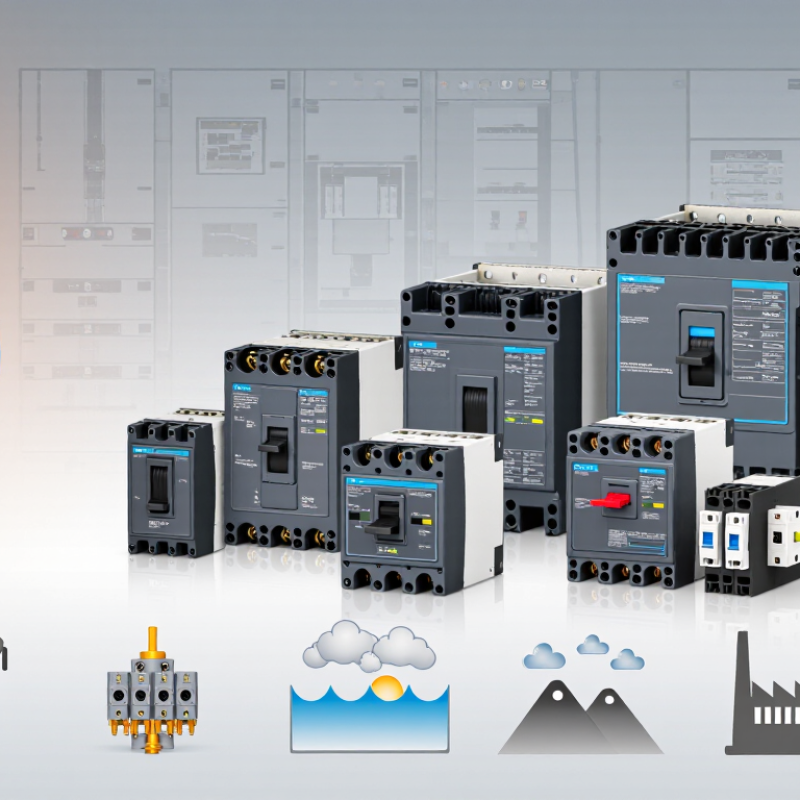
For global buyers, an MCCB’s label is only the starting point. IEC 60947-2 sets requirements for circuit-breakers used in low-voltage installations, including performance and verification. A 690 V AC rating can suit certain industrial distribution systems, but it does not guarantee safe operation in every panel. Check the network voltage, frequency, ambient temperature, enclosure, and available fault current. Small details matter. A breaker tested in one configuration may need different clearances or derating in another.
Icu, or ultimate short-circuit breaking capacity, describes the maximum fault current a breaker can interrupt under specified test conditions. Products rated from 10 to 100 kA span very different applications; match the rating to the prospective fault current at the installation point. Do not treat Icu as a routine operating target. Also review Ics, the service short-circuit breaking capacity, because it indicates performance after interruption testing.
The IEC standard provides the framework, while the project’s coordination study determines suitability. IEA’s Electricity 2025 report estimated global electricity demand rose by 4.3% in 2024, underscoring the need for careful distribution planning. Still, demand growth alone cannot select a breaker. Verify test certificates, trip settings, and upstream and downstream coordination. Site conditions can complicate the neat calculation.
The IEA’s Electricity 2024 report forecasts global electricity demand growth of about 3.2% annually through 2026. That growth increases pressure on low-voltage distribution systems. For large feeders, a 1600 A frame offers useful capacity, but frame size alone proves little. Confirm the continuous current, enclosure temperature, conductor arrangement, and available fault current.
Icu is the ultimate short-circuit breaking capacity. Ics is the service short-circuit capacity after testing. IEC 60947-2 requires both values on the technical documentation. A practical selection should compare the calculated prospective fault current with Icu at the actual voltage. Then, check whether Ics meets the project’s required performance. A higher Icu is not automatically safer. Coordination still matters.
Tips: Request test certificates, time-current curves, and trip-unit settings before approval.
Electronic trip units can provide long-time, short-time, instantaneous, and ground-fault protection. For a 1600 A feeder, adjustable settings help match cables, transformers, and downstream breakers. Selectivity may require delaying short-time tripping, but excessive delay can increase arc energy. That trade-off deserves engineering review. In field projects, I often see settings copied from older panels. That is convenient, but not reliable. Verify the sensor rating, neutral protection, ambient derating, and communication functions separately. Regional certification and installation rules must also be checked before purchase.
For global buyers comparing moulded case circuit breakers, the standard is more than a label on the enclosure. IEC 60947-2 and UL 489 use different testing frameworks and rating conventions. A breaker tested to one standard should not be assumed equivalent to a unit tested to the other. Check the certification and the exact catalog ratings for the intended market.
For North American systems up to 600 V, confirm the breaker’s voltage rating, interrupting rating, and suitability for the available fault current. These values matter at the actual installation point, not just on a general product sheet. IEC specifications also require careful review of rated operational voltage and breaking capacity. Short-circuit values may use different test conditions, so direct number-to-number comparisons can mislead. Small detail, big consequence.
Trip settings and coordination deserve attention too. A breaker that protects a feeder may need to coordinate with downstream devices during a fault. Verify the manufacturer’s published curves and installation conditions with a qualified electrical engineer. This is where selection gets less tidy: ambient temperature, enclosure heating, and conductor size can affect practical performance. A neat table cannot capture every site condition. Check the project drawings, local requirements, and certification records before purchase.
Choosing an MCCB should begin with the application, not the catalog price. Industrial panels often need high breaking capacity, adjustable protection, and strong motor-starting tolerance. Dust, heat, vibration, and limited maintenance access also influence enclosure and terminal selection. A thermal-magnetic unit may suit basic feeders, while electronic trip protection offers finer overload and short-circuit settings.
Commercial buildings usually prioritize compact installation, selective coordination, and dependable protection for lighting, HVAC, and distribution boards. Four-pole models can help manage neutral switching in suitable systems. Renewable projects require careful attention to voltage, polarity, and DC interruption ratings. Inverter output circuits may need different protection from battery or photovoltaic circuits. Check tested performance, not just printed ratings.
EV distribution adds frequent load changes and higher continuous demand. Chargers may require dedicated feeders, residual-current coordination, and clear thermal calculations.
I have seen installations pass the initial inspection but suffer nuisance trips after several vehicles charge together. The calculated load was correct, yet the real usage pattern was not. That is an easy mistake.
Buyers should request IEC 60947-2 test evidence, short-circuit data, temperature derating curves, installation dimensions, and traceable quality records. Local grid rules still matter, even when the breaker appears technically suitable.
A strong MCCB shortlist starts with the fault level, not the catalogue cover. Check the installation’s prospective short-circuit current, operating voltage, and load profile. The breaker’s interrupting capacity must suit the actual point of installation. Too little capacity creates a serious safety risk; excessive ratings can add cost without improving protection. Confirm trip settings against cable limits and equipment requirements.
Selectivity deserves a real check. A downstream fault should, where practical, trip the nearest protective device while upstream circuits remain energized. Compare time-current curves and verify coordination across the expected fault range. A neat diagram is not enough. I have seen designs look selective on paper, then leave uncertainty around motor starting currents or closely spaced trip settings. That detail is easy to miss.
Certification and evidence matter. Review test reports, applicable standards, temperature limits, and terminal compatibility for the intended panel. Then estimate total cost: purchase price, installation time, accessories, routine inspection, replacement parts, and downtime exposure. A lower-priced breaker may need extra engineering or panel modifications. Keep records. They help later. Still, forecasts are imperfect; actual maintenance conditions can differ from the spreadsheet. A shortlist should state its assumptions clearly and leave room for site verification.
This is an example of a widget area that you can place text to describe a product or service. You can also use other WordPress widgets such as recent posts, recent comments, a tag cloud or more.
© 2025 International Fluid Power, Inc. All Right Reserved.