INTERNATIONAL FLUID POWER, INC.

The Experts for Hydraulic Power Units, Components, and Custom Hydraulic Systems
Slider

China Top Lightning Arrester Manufacturers How to Choose?

Choosing among China’s top Lightning Arrester manufacturers requires more than comparing prices or browsing polished factory websites. A reliable decision begins with the protection duty, system voltage, grounding method, and installation environment. A coastal substation faces salt pollution, while a factory roof may face dust, vibration, and repeated switching surges. These details change the arrester specification.

Experienced buyers usually review continuous operating voltage, nominal discharge current, residual voltage, energy capability, and housing materials. They also ask for routine test records, type-test evidence, production traceability, and inspection procedures. Compliance with relevant standards, such as IEC 60099-4, should be verified through authentic documents. Photos are useful, but test data matters more. A serious manufacturer can explain its zinc oxide varistor design, sealing process, aging tests, and quality controls without avoiding technical questions.

Supplier evaluation should include engineering support and after-sales response. Can the manufacturer recommend an arrester for a specific transformer, cable system, or photovoltaic installation? Can it provide drawings, installation guidance, and replacement advice? No supplier is perfect. That assumption can mislead. Even a well-known factory may offer unsuitable models for a particular network. Independent verification remains valuable, especially for large projects. This guide examines practical selection criteria, manufacturer credibility, product performance, and total ownership cost. The goal is not to find the cheapest Lightning Arrester, but to choose dependable protection that performs under real electrical stress. Small details matter.
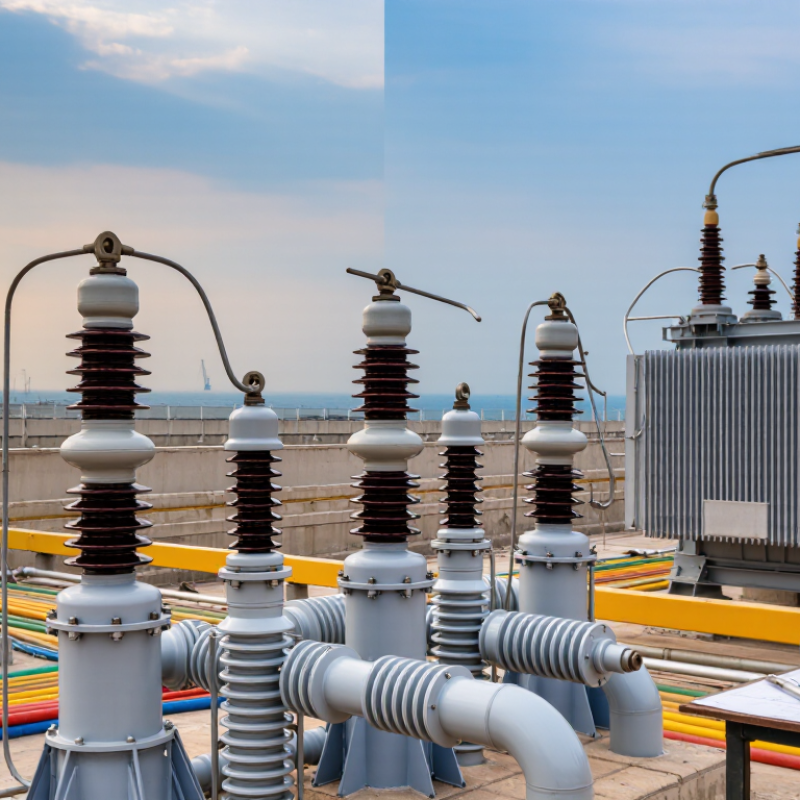
China Top Lightning Arrester Manufacturers How to Choose?

What Is a Lightning Arrester and How Does It Work?

China Top Lightning Arrester Manufacturers: How to Choose?

A lightning arrester protects electrical equipment from sudden overvoltage. It normally remains nonconductive during regular operation. When lightning creates a surge, its metal-oxide varistor becomes highly conductive. The arrester then diverts excess energy toward ground. The voltage falls quickly. Equipment sees a safer level.

IEC 60099-4 covers metal-oxide surge arresters for power systems, while IEEE C62.11 addresses their testing and application. These standards highlight key choices, including continuous operating voltage, rated voltage, discharge current, and energy capability. NOAA’s National Severe Storms Laboratory estimates that lightning strikes the United States about 25 million times each year. That figure explains why surge exposure cannot be treated as a rare event. In field assessments, a recurring mistake is selecting an arrester by voltage alone. Cable length, grounding resistance, altitude, pollution, and transformer distance also affect performance. The calculation may be less convenient, but it is safer.

Tips: Check the system’s maximum continuous voltage first. Confirm the arrester’s nominal discharge current and residual voltage. Review IEC 60099-4 test evidence and maintenance records. Inspect grounding connections physically, not only on paper. A damaged ground path can make a good arrester ineffective. Choose an enclosure suitable for heat, moisture, and contamination. Do not ignore service indicators. A failed unit may look normal from a distance.

Which Lightning Arrester Types Suit Different Applications?

China Top Lightning Arrester Manufacturers: How to Choose?

Different sites require different lightning arrester types.

Type 1 surge protective devices suit service entrances exposed to direct lightning currents, especially buildings with external lightning protection systems.

Type 2 devices protect distribution panels against induced surges and switching events. They are common in commercial buildings, workshops, and residential systems.

Type 3 devices belong near sensitive equipment, such as control panels, computers, or medical instruments. Their protection is more localized.

Power systems are not the only concern. Photovoltaic installations need DC-rated surge protection, while communication lines require signal or data SPDs with suitable frequency characteristics.

Check the system voltage, maximum continuous operating voltage, discharge current, impulse current, and protection level. Coordination between upstream and downstream devices also matters.

A low protection level can reduce equipment stress, but only when the grounding arrangement is correct. That detail is often underestimated.

Tips:

Ask manufacturers for independent test reports, clear wiring diagrams, and thermal disconnection data. Confirm compliance with relevant IEC standards and inspect the earthing system before installation.

Choose replaceable modules where maintenance access is limited. In field reviews, incorrect voltage selection appears more often than expected. A stronger arrester is not automatically safer.

Product selection should match the network, exposure level, and equipment sensitivity. When conditions are uncertain, a qualified electrical engineer should verify the design.

How to Evaluate China’s Top Lightning Arrester Manufacturers

Choosing China’s top lightning arrester manufacturers requires more than comparing prices. Evaluate their engineering experience, production controls, and testing capabilities. Ask how they select zinc oxide blocks, control assembly pressure, and manage insulation quality. A reliable manufacturer should provide clear test reports, traceable batch numbers, and evidence of compliance with relevant international standards.

Visit the factory if possible. Look at aging chambers, leakage-current testers, impulse generators, and final inspection areas. Real production details matter. Check whether technicians record test results for each batch. Also review installation records from projects with similar voltage levels, climate, and pollution conditions. A polished website proves little. An independent laboratory report is stronger evidence. Still, documents can be outdated, so verify their issue dates and product models carefully.

Tips: Compare at least three manufacturers. Request samples before placing a large order. Confirm rated voltage, discharge class, creepage distance, sealing design, and operating temperature. Ask about salt-fog testing for coastal projects. Discuss spare parts, warranty response, and technical support in writing. A low quotation may hide weaker materials or limited testing. I would not judge a supplier from one factory visit alone; production consistency needs repeated evidence. Mistakes happen, but transparent corrective records reveal how seriously a manufacturer manages quality.

China Top Lightning Arrester Manufacturers How to Choose? - How to Evaluate China’s Top Lightning Arrester Manufacturers

Evaluation Dimension Weight What to Check Relevant Technical Reference or Benchmark Recommended Evidence Rating Guide
Technical and Product Performance
Applicable Product Standard 15% Confirm that the proposed surge protective device or lightning arrester is designed and tested for the intended application, voltage system, earthing arrangement, and installation location. IEC 61643-11 for low-voltage surge protective devices; IEC 60099-4 for metal-oxide surge arresters used on AC power systems above 1 kV. Current test reports, product technical files, standard edition, product scope, and rated-system information. 5 = Correct standard and complete documentation; 1 = Standard or application is unclear.
Electrical Ratings 15% Check maximum continuous operating voltage, nominal discharge current, impulse current capability, residual voltage, short-circuit rating, and temporary overvoltage performance. Ratings must match the system voltage, expected transient environment, protective level, and coordination requirements of the installation. Datasheets, type-test reports, selection calculations, and a written application recommendation. 5 = Ratings are fully matched and verified; 1 = Ratings are incomplete or unsuitable.
Protection Coordination 10% Evaluate coordination between the arrester, upstream overcurrent protection, downstream equipment, cable length, and other surge protection stages. Protection should be coordinated with the installation design and the principles of IEC 62305 and IEC 61643 series standards. Coordination diagram, installation instructions, maximum backup-fuse data, and wiring recommendations. 5 = Clear coordination guidance; 1 = No system-level guidance.
Environmental and Mechanical Suitability 8% Review enclosure material, ingress protection, operating temperature, humidity, altitude, pollution level, vibration resistance, and corrosion resistance. Environmental ratings should be stated according to the applicable product standard and the actual site conditions. Environmental test reports, IP rating information, material declarations, and installation limitations. 5 = Site conditions are fully covered; 1 = Environmental limits are missing.
Service Life and Failure Safety 10% Assess thermal stability, disconnector operation, failure indication, remote signaling, follow-current behavior, and safe end-of-life response. Safety features should be demonstrated through applicable type tests and clearly described in the installation manual. Thermal-stability results, disconnector specifications, alarm-contact diagrams, and failure-mode documentation. 5 = Comprehensive safety functions; 1 = No verifiable failure-safety data.
Quality Management and Manufacturing Capability
Quality Management System 10% Verify whether production, inspection, calibration, nonconformance control, and corrective actions are managed through a documented quality system. ISO 9001 certification is useful evidence, but the certificate scope, validity, issuing body, and manufacturing site must be checked. Valid certificate, audit records, process-control plan, inspection records, and calibration certificates. 5 = Valid system with strong process evidence; 1 = No credible quality-system evidence.
Factory and Process Control 8% Inspect incoming-material control, varistor or component traceability, assembly controls, sealing processes, routine testing, and final inspection. Critical characteristics should be identified, measured, recorded, and linked to production batches. Factory audit report, process flow chart, control plan, sample inspection records, and batch-traceability procedure. 5 = Controlled and traceable process; 1 = Predominantly undocumented process.
Testing and Calibration Resources 7% Determine whether the manufacturer can perform or arrange routine and type testing using calibrated equipment and controlled test procedures. Test methods should correspond to the declared IEC or national standard and the rated product category. Equipment list, calibration records, test procedures, sample test reports, and laboratory accreditation where applicable. 5 = Strong internal or qualified independent testing capability; 1 = Testing cannot be verified.
Compliance, Supply, and Commercial Reliability
Certification and Market Compliance 7% Check conformity requirements for the destination market, including electrical safety, electromagnetic compatibility where applicable, and import documentation. Required conformity marks and certificates depend on the destination country, product category, and installation voltage. Declaration of conformity, certificate scope, test reports, labeling samples, and technical construction file where required. 5 = Destination-market compliance is complete; 1 = Documents are generic or unverifiable.
Product Consistency and Traceability 5% Assess whether product versions, raw materials, production batches, labels, and test records can be traced throughout the supply chain. Each shipment should be identifiable by model, batch or serial reference, production date, and inspection status. Label samples, batch records, certificate of conformity, inspection report, and change-control procedure. 5 = Full traceability; 1 = Product identity and batch history are unclear.
Delivery and Capacity Stability 5% Evaluate production capacity, lead-time consistency, safety-stock practices, export experience, packaging, and ability to support repeat orders. Capacity claims should be supported by production records, realistic lead times, and documented order-fulfillment controls. Capacity statement, sample production schedule, packaging specification, shipping records, and continuity plan. 5 = Stable and transparent supply capability; 1 = Capacity claims are unsupported.
Technical Support and Warranty 5% Review pre-sales engineering support, installation guidance, troubleshooting response, spare-part policy, warranty terms, and complaint handling. Warranty terms should define coverage period, exclusions, claim evidence, response time, and responsibilities for installation and transport. Warranty document, service-level procedure, installation manual, response contacts, and anonymized corrective-action examples. 5 = Clear and responsive support system; 1 = Informal or undefined support.
Recommended Scoring Method
Weighted Score 100% Assign each dimension a rating from 1 to 5, multiply the rating by the corresponding weight, and add all weighted results. Weighted score = Σ (Dimension Rating ÷ 5 × Dimension Weight). Use the same document checklist, sample-testing method, and factory-audit criteria for every shortlisted supplier. 4.0–5.0 = Strong candidate; 3.0–3.9 = Conditional approval; below 3.0 = Further verification required.
Mandatory Disqualifiers Pass/Fail Do not approve a supplier if certificates are falsified or outside their scope, critical ratings are missing, required tests cannot be verified, or the product is unsuitable for the intended system. Compliance and safety requirements take priority over price, delivery time, and marketing claims. Independent certificate verification, witnessed testing, factory audit, and documented technical review. Pass = No critical issue; Fail = Reject or require corrective action before approval.
Evaluation Note: A manufacturer should be selected based on verified technical suitability, documented compliance, production consistency, and lifecycle support rather than price or catalog variety alone. All certificates and test reports should be checked for validity, scope, product-model matching, and issuing organization.

What Technical Standards and Quality Tests Should You Check?

When choosing a top lightning arrester manufacturer in China, begin with applicable technical standards. For metal-oxide arresters, check compliance with IEC 60099-4, IEEE C62.11, or the relevant national standard. Confirm the exact edition and test scope. A certificate alone is not enough.

Review the arrester’s rated voltage, continuous operating voltage, nominal discharge current, and residual voltage. These values must match the system, not just the product brochure. Ask for type-test, routine-test, and sample-test records. Important tests include operating-duty performance, long-duration current impulse, thermal stability, insulation withstand, leakage current, and sealing inspection. For polymer housings, examine weathering, tracking, erosion, and pressure-relief performance. Test reports should show equipment IDs, test conditions, measured results, and authorized laboratory details.

Factory quality control matters as much as laboratory results. Check zinc-oxide block traceability, moisture control, assembly records, and final visual inspection. Request production samples from the same process used for delivery. Compare serial numbers with inspection documents. During supplier audits, look for calibrated instruments and controlled test procedures. Small gaps can become expensive failures. I would also question unusually perfect data, because real tests include variation. Some buyers focus too heavily on price and certificates. That approach needs reconsideration. A reliable supplier explains limitations clearly and provides technical support for installation, grounding, and follow-up inspection.

Lightning Arrester Manufacturer Selection: Reference Test Waveforms

The chart shows nominal impulse-waveform parameters commonly used when evaluating metal-oxide surge arresters. The 8/20 μs lightning-current impulse, 30/60 μs switching-current impulse, 1/20 μs steep-current impulse, and 4/10 μs high-current impulse are referenced in IEC 60099-4. The 1.2/50 μs voltage impulse is specified in IEC 60060-1. When comparing manufacturers, verify that type tests, routine tests, residual-voltage tests, leakage-current checks, and environmental or aging tests are performed according to the applicable standard and arrester rating.

How to Compare Suppliers, Costs, Warranties, and After-Sales Support

China Top Lightning Arrester Manufacturers: How to Choose?

Choosing a lightning arrester supplier requires more than comparing catalog prices. Check production experience, factory testing equipment, and quality-control records. Ask for test reports covering rated voltage, maximum continuous operating voltage, and discharge current. Confirm that the products match recognized international or regional standards. A supplier should explain its design choices clearly, not hide behind technical language. Request samples when possible. Inspect the housing, terminals, sealing, and labeling before placing a large order.

Cost comparison should include more than the unit price. Calculate freight, testing, installation, spare parts, and possible replacement expenses. A cheaper arrester may have weaker sealing or shorter service life. That difference becomes expensive in a wet industrial site. Review payment terms carefully. Ask whether customized testing or packaging creates additional charges. The numbers may look simple. They rarely are.

Warranty terms reveal a supplier’s confidence. Check coverage period, excluded failures, claim documents, and replacement procedures. Ask how quickly technical staff respond after installation. Reliable after-sales support includes wiring guidance, fault analysis, replacement parts, and remote troubleshooting. Request contact details for engineers, not only sales staff. Keep written records of every promise. Some suppliers respond quickly before payment, then become slow afterward. That possibility deserves attention. A factory audit, independent inspection, or small trial order can expose weaknesses before they affect an entire project.