International Fluid Power Inc.
International Fluid Power - Innovative Partners For Global Sourcing Of Fluid Power Products. Your Complete Hydraulic Source in SE Minnesota.
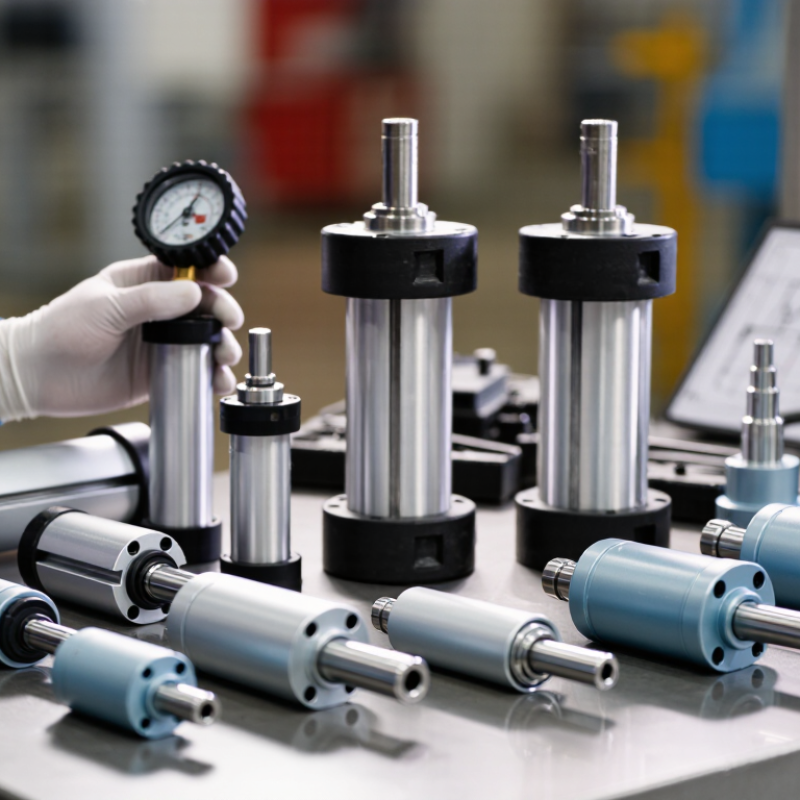
Choosing a reliable Mini Hydraulic Cylinder manufacturer requires more than comparing prices or browsing polished catalogs. Compact cylinders often work inside tight spaces, where a few millimeters can affect alignment, force delivery, and service life. This guide explores China’s leading suppliers through practical criteria, including bore and stroke options, working pressure, rod materials, seal quality, machining accuracy, and inspection procedures.
The manufacturers considered here should demonstrate real production capability, not only trading experience. We look for factory evidence, engineering support, customization capacity, documented quality systems, and responsive after-sales communication. Product samples, pressure testing, surface treatment, and packaging details can reveal more than marketing language. Small parts matter. A poorly finished rod, weak seal, or inconsistent tolerance may cause leakage and downtime in agricultural equipment, automation systems, lifting devices, and compact construction machinery.
This overview is intended to support informed supplier evaluation. It does not treat “top” as an absolute or permanent ranking, because production quality and service can change over time. Public information may also be incomplete. That deserves caution. Readers should request current drawings, test reports, material specifications, lead times, and reference projects before placing an order. In my assessment, the strongest manufacturers combine repeatable manufacturing with clear technical communication. They explain limitations instead of promising everything. That remains difficult, but it builds trust. The following introduction to China’s top 10 Mini Hydraulic Cylinder manufacturers highlights their capabilities, typical applications, and selection considerations for international buyers.
China Top 10 Mini Hydraulic Cylinder Manufacturers?
Mini hydraulic cylinders convert pressurized fluid into short, controlled linear movement. They fit where space is limited, such as compact presses, lifting tables, agricultural tools, and automated fixtures. Their small size does not mean low force. A 50 mm bore operating at 160 bar can theoretically produce about 31 kN. That force is substantial. There is no universal definition of “mini,” so buyers should compare bore, stroke, mounting, pressure, and duty cycle instead of relying on labels.
The 2024 Global Hydraulic Cylinders Market report estimates that the sector will grow steadily through 2030, supported by construction, industrial automation, and mobile equipment demand. Mini cylinders benefit from this trend because machines are becoming smaller and more integrated. On a production line, one cylinder may clamp a metal part every few seconds. In a compact lift, it may work under dust, vibration, and uneven loading. Side loads remain a common design mistake.
Selection requires practical testing. Engineers should check leakage, rod buckling, seal compatibility, temperature range, and fatigue performance. ISO 6020-2 provides useful dimensional guidance for certain compact hydraulic cylinders, but standards do not replace application testing. A supplier’s brochure is not proof. Factory inspection records, pressure-test data, material certificates, and sample endurance results offer stronger evidence. I would also question unusually high force claims, because friction, oil temperature, and poor alignment reduce real performance.
Evaluating Chinese mini hydraulic cylinder manufacturers requires more than comparing prices. Check dimensional accuracy, rated pressure, stroke consistency, and leakage performance. A reliable supplier should provide clear drawings, material certificates, inspection records, and traceable batch numbers. ISO 9001 certification can support process control, but it cannot replace product testing. Ask for evidence.
In practical audits, I examine cylinder samples under repeated load cycles. Surface finish matters. Poorly finished rods can damage seals and shorten service life. Inspect welding quality, chrome thickness, thread accuracy, and corrosion protection. The manufacturer should explain seal materials for different temperatures and fluids. Independent testing is useful when specifications seem vague. However, even a strong factory may miss small tolerance problems in mass production.
Tips
Request a sample before signing a large order. Compare measured results with the technical drawing. Ask how rejected parts are handled. Visit the production line if possible. A video tour helps, but it is not full proof. Record pressure, stroke, and leakage data during acceptance testing. Also review response times for technical questions; slow answers may signal weak engineering support. Price remains important, yet the cheapest option can become expensive after seal failures, delays, or redesign work. One overlooked detail can change the whole evaluation.
Profiles of China’s Top 10 Mini Hydraulic Cylinder Manufacturers
China’s mini hydraulic cylinder sector serves automation, agriculture, construction, and mobile equipment. Mordor Intelligence estimated the global hydraulic equipment market at about USD 49.7 billion in 2024. Demand is shifting toward compact, efficient, and sensor-ready components.
The first profile focuses on welded cylinders for tight spaces. The second emphasizes tie-rod designs and easy maintenance. The third supplies stainless-steel cylinders for humid environments. Another specializes in OEM production, using CNC turning and automated honing. A fifth targets agricultural machinery, where dust seals and impact resistance matter. The sixth develops miniature cylinders for factory automation. The seventh works with high-temperature applications, though published testing details may be limited. The eighth improves low-friction performance through polished rods and better seals. The ninth highlights export documentation and ISO 9001 quality systems. The tenth supports prototypes and small production batches, helping engineers test unusual dimensions.
According to Grand View Research, automation and mobile machinery remain important hydraulic equipment demand areas. Buyers should inspect pressure-test records, rod coating data, seal compatibility, and sample traceability. A small body does not mean a simple design. Bore accuracy, side-load control, and installation space can decide service life. Some supplier claims still rely on catalog figures rather than independent testing. That deserves caution. Engineers should request cycle-life evidence under realistic loads, temperatures, and contamination levels.
| Profile | Primary Manufacturing Region | Core Product Focus | Typical Bore Range | Typical Stroke Range | Typical Working Pressure | Common Materials | Mounting Options | Customization Capability | Typical Application Sectors | Quality & Compliance Focus | Market Positioning |
|---|---|---|---|---|---|---|---|---|---|---|---|
| 01 | Jiangsu and Zhejiang industrial clusters | Compact single-acting and double-acting hydraulic cylinders | 20–80 mm | 25–500 mm | 16–25 MPa | Carbon steel, stainless steel, hardened chrome-plated rod | Clevis, flange, trunnion, threaded, foot mounting | High; dimensions, seals, ports, coatings, and mounting geometry | Material handling, agricultural equipment, compact machinery | Dimensional inspection, pressure testing, leakage control, ISO-oriented production procedures | ★★★★★ Broad OEM supply capability |
| 02 | Shandong machinery manufacturing region | Mini cylinders for construction and agricultural machinery | 25–100 mm | 50–600 mm | 16–25 MPa | Machined steel tube, alloy steel piston rod, polyurethane and NBR seals | Welded, pinned, spherical-eye, flange mounting | High; application-specific force, stroke, and connection design | Loaders, compact excavators, trailers, agricultural implements | Weld quality control, rod surface-finish inspection, hydrostatic testing | ★★★★☆ Heavy-duty value segment |
| 03 | Guangdong and Pearl River Delta | Small-bore cylinders for automation and equipment integration | 16–63 mm | 20–300 mm | 10–21 MPa | Aluminum or steel body, stainless or chrome-plated rod | Threaded, compact flange, rear clevis, front eye | High; compact envelope and special port arrangements | Packaging equipment, robotics support systems, assembly machinery | Repeatability, clean machining, seal compatibility, batch traceability | ★★★★☆ Compact automation solutions |
| 04 | Zhejiang hydraulic component cluster | Standard and interchangeable mini hydraulic cylinders | 20–100 mm | 25–500 mm | 16–21 MPa | Carbon steel, ductile iron components, chrome-plated piston rods | Foot, flange, clevis, threaded, cross-tube mounting | Medium to high; standard models plus OEM modifications | Industrial machinery, agricultural systems, lifting equipment | Process inspection, pressure testing, dimensional interchangeability | ★★★★☆ Standardized product range |
| 05 | Jiangsu and Shanghai surrounding region | Precision compact cylinders for industrial hydraulic systems | 25–80 mm | 50–400 mm | 16–25 MPa | Fine-finished steel tube, alloy rod, engineered seal compounds | Flange, trunnion, threaded, clevis mounting | High; tolerance, seal, coating, and test requirements | Machine tools, process equipment, steel handling, automation | Precision machining, cleanliness control, pressure and endurance testing | ★★★★★ Precision-oriented supplier profile |
| 06 | Hebei and northern China manufacturing centers | Robust welded mini cylinders for mobile machinery | 25–100 mm | 50–800 mm | 16–25 MPa | Welded steel barrel, induction-hardened rod, NBR or polyurethane seals | Welded clevis, pin-eye, trunnion, base mounting | High; ruggedized designs and customized interfaces | Mining support equipment, agricultural machines, municipal vehicles | Weld penetration, fatigue resistance, surface hardness, pressure testing | ★★★★☆ Durability-focused production |
| 07 | Fujian and southeastern coastal region | Compact cylinders for marine, vehicle, and mobile applications | 20–80 mm | 25–500 mm | 10–21 MPa | Stainless steel options, coated carbon steel, corrosion-resistant rods | Clevis, flange, threaded, eye, compact base mounting | Medium to high; corrosion protection and special sealing packages | Marine equipment, vehicle bodies, access platforms, mobile systems | Corrosion resistance, salt-spray considerations, sealing and pressure checks | ★★★★☆ Application-specific corrosion solutions |
| 08 | Chongqing and southwest machinery region | Mini cylinders for compact off-road and power equipment | 25–90 mm | 50–600 mm | 16–25 MPa | Alloy steel, chrome-plated rod, high-temperature seal options | Welded, clevis, pin-eye, flange mounting | High; vibration, temperature, and space constraints | Off-road vehicles, forestry machinery, power-generation equipment | Vibration resistance, fatigue testing, rod alignment, hydrostatic testing | ★★★★☆ Mobile-equipment specialization |
| 09 | Anhui and central China industrial region | Economical mini cylinders for general industrial use | 20–80 mm | 25–400 mm | 10–21 MPa | Carbon steel, standard chrome-plated rod, NBR seals | Threaded, clevis, flange, foot mounting | Medium; standard design with selected OEM adjustments | Material handling, presses, agricultural tools, workshop equipment | Incoming-material inspection, dimensional checks, leakage and pressure testing | ★★★☆☆ Cost-conscious general-purpose supply |
| 10 | Guangxi and southern machinery manufacturing region | Mini cylinders for compact construction and lifting equipment | 25–100 mm | 50–700 mm | 16–25 MPa | Structural steel, alloy piston rods, heavy-duty seal systems | Pin-eye, clevis, flange, trunnion, welded mounting | High; force, stroke, mounting, and environmental adaptations | Compact excavators, lifting systems, agricultural and utility equipment | Load testing, weld inspection, pressure retention, coating and corrosion checks | ★★★★☆ Mobile hydraulic equipment support |
China’s top 10 mini hydraulic cylinder manufacturers should be compared beyond catalog size. A broad product range may include single-acting, double-acting, tie-rod, welded, and compact cylinders. Check practical specifications, such as a 25 mm bore, 100 mm stroke, mounting style, and operating pressure. These details reveal whether a supplier understands real equipment requirements.
Customization separates capable manufacturers from simple resellers. Reliable suppliers can adjust ports, rod coatings, seal materials, tolerances, and sensor positions. They should provide technical drawings before production. During supplier evaluations, ask for sample measurements, pressure-test records, and material certificates. A polished website is not proof. Sometimes, the fastest answer hides weak engineering support.
Quality depends on process control, not inspection alone. Look for traceable steel batches, controlled honing, clean assembly areas, and documented leak testing. Production capacity also needs careful checking. Monthly output, machining equipment, heat-treatment access, and backup suppliers affect delivery stability. A factory may promise 10,000 units monthly but lack enough testing stations. That matters. Review capacity by model, not only total volume. Allow time for a pilot order, because even an experienced assessment can miss small sealing or tolerance problems.
Choosing among China’s top mini hydraulic cylinder manufacturers requires more than comparing prices. Start with your application details: bore diameter, stroke length, operating pressure, mounting space, fluid type, and cycle frequency. A reliable manufacturer should review these conditions before recommending a design. Ask for engineering drawings, material specifications, tolerance data, and sample testing records. Vague answers are warning signs.
Visit the factory when possible, or request a live video inspection. Check machining equipment, sealing assembly, cleanliness, and pressure-testing procedures. Ask how each cylinder is traced from raw material to final inspection. Consistent records matter. So does communication. Your supplier should confirm production capacity, minimum order quantities, packaging, and realistic delivery times in writing.
Do not judge quality from one attractive sample. Test several units under actual load and temperature conditions. Look for leakage, uneven movement, rod scoring, and mounting errors. I have seen projects fail because the cylinder fit the drawing but not the working environment. That mistake is easy to repeat. A capable Chinese manufacturer will discuss possible weaknesses instead of promising perfection. Review corrective actions, replacement procedures, and inspection responsibilities before placing a larger order. Supplier selection is not only a purchasing decision. It is a risk-control process.
This is an example of a widget area that you can place text to describe a product or service. You can also use other WordPress widgets such as recent posts, recent comments, a tag cloud or more.
© 2025 International Fluid Power, Inc. All Right Reserved.